

From Artificial Intelligence to Atonement Theories
Reviewing six very different books I've read recently.

I believe reading to be one of life’s great pleasures. Much of my reading time - already truncated in this season of life - has been absorbed over the past several years by my MA studies. I’m so glad that I was able to study, but I’ve now got quite the stack of books I’ve wanted to read, built up during the several years where my reading material was directed by subsequent essay deadlines! 2026 is the time to begin making a serious dent in my burgeoning reading list, and so what follows is a brief review of six of the books I’ve read since the beginning of this year. Before the reviews, here is one of my favourite quotes on reading from C.S Lewis for all my fellow lectiophiles out there:
‘Those of us who have been true readers all our life seldom fully realise the enormous extension of our being which we owe to authors. We realise it best when we talk with an unliterary friend. He may be full of goodness and good sense but he inhabits a tiny world. In it, we should be suffocated.’ C.S. Lewis
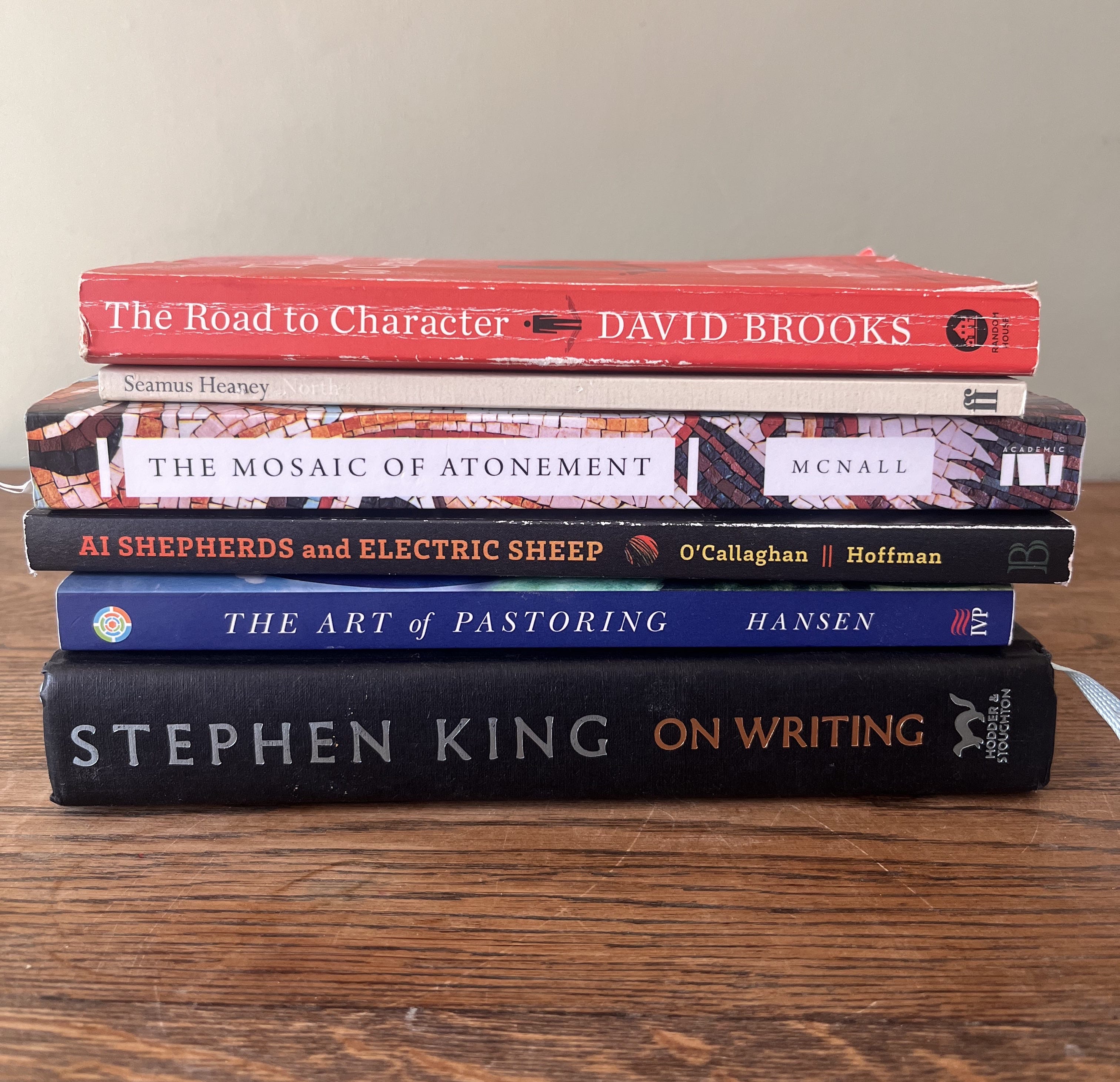
1. On Writing: A Memoir of the Craft - Stephen King
Stephen King is one of the most successful authors ever. Yet, I had never read a word that he has written because horror is not my thing, and he is often referred to as the ‘master of horror.’ However, after telling a friend about my dream of becoming a good writer, she got me a copy of this - his nonfiction work On Writing (thanks Sarah!). I loved reading this book. He has such an immediate and interesting voice as a writer. In the book he says that ‘writing is refined thinking’ and as I read it, I got the clear sense that this is someone who has read a lot, written a lot, and thought about both a lot.
The book follows an interesting structure, with the first section being autobiographical, outlining his childhood and formative experiences and how these shaped his writing. After that is a brief section (‘Toolbox’) where he gives some specific advice on the techniques of writing (my favourite takeaway was ‘adverbs are not your friend’). Then comes the main section (‘On Writing’) where he offers hard-won wisdom on what makes for a great story. Some of it is specific to fiction writing but his style is so engaging that I still enjoyed the bits which are less relevant to what I’m trying to learn. To finish, there is a section detailing the near-fatal road accident he was involved in during the writing of this book in 1999, which makes for compelling reading. Now convinced of his brilliance as a storyteller, I’m going to add one of his novels to my list for later this year - happily they aren’t all horror stories!
In brief: Enjoyable! I would recommend this to anyone with even a passing interest in the art of storytelling. I might read it again in the future.
2. The Mosaic of Atonement - Joshua McNall
Each Easter at church I host an evening of discussion on atonement theology, and for this year’s event I wanted to push my own understanding on a few things further than I had before. I intentionally read this book slowly over a few months and made extensive notes as I went (and I’ve written a bit about it already in a previous post).
McNall’s basic premise is to take key atonement models (he opts for recapitulation, penal substitution, christus victor and moral influence) and show how they are an interdependent ‘mosaic’ - each contributing something significant to how we understand Christ’s work on the cross. He argues that we must avoid both the temptation to overemphasise one model of the atonement at the expense of the others and the temptation to see the models as a disconnected plurality.
It’s a brilliantly written book, and I think McNall does an admirable job of making his case. There were some surprises along the way - for example I didn’t expect a whole chapter on the ontological status of Satan! Perhaps the biggest learning for me was a deeper understanding of recapitulation in the vein of Irenaeus - how Jesus could ‘re-act’ the human story behalf of all of humanity, how he could ‘do and be what Adam & Israel had failed to do and be.’
In brief: if you’re looking for a rigorous but not difficult to read work of theology, or you want to sharpen your atonement theology, I don’t think you could get much better than this.
3. The Art of Pastoring - David Hansen
The Art of Pastoring came to me via a recommendation from a friend of a friend who had asked the question, “what’s the single most important book on pastoring you’ve ever read?” This was one of the most enjoyable, relatable, and relevant books I’ve read in ages. I felt my heart leaping multiple times throughout as the author put words to parts of my own life and dreams that had so far been unarticulated.
Hansen is a wonderful writer, and he comes across as a humble, intelligent, and devoted pastor. It’s very much in the Eugene Peterson wheelhouse in terms of era, references, and tone, and he gives a lot of distilled wisdom on how to love a congregation, develop prayerful rhythms, maintain your interior life, and preach. I don’t think I’ve ever taken so many notes and quotes from a book as I did from this one. Here is one of my favourites:
“…so I stopped reading how-to books. Instead I read theology, biblical studies and church history. I alternated between the disciplines. These books from the classical disciplines of theology didn’t teach me how to do pastoral ministry, but they helped me immensely in my regular duties. I discovered that spending a day reading thirty pages of Karl Barth’s Dogmatics helped me more in my pastoral work than a hundred of pages of how-to literature.”
In brief: if, like me, you are a pastor who wants to love God, love others, serve the church and yet remain joyfully yourself, you must read this book! I plan to come back to it many times.
4. North - Seamus Heaney
I always have a book of poetry that I’m working through. This time I’d chosen Seamus Heaney’s fourth major collection of poems, North, published in 1975. This was right around the height of the Troubles and his work in North has this as its focus. I read several of these poems per day whilst away on holiday for a week and found them to be less resonant with me than much of Heaney’s other work which I’ve read. I grew up mere miles from where he did, and so I feel a deep familiarity when he speaks of places and characters and cultural eccentricities.
I found parts of this collection quite abstract; in part I think this is because he searches through Northern European history for images and symbols to try and relate them to what was happening in Northern Ireland at the time, and I found this blending of subjects difficult to follow at times. As you’d expect however, there are some moments of stunning poetry. Here is my favourite stanza in the collection, from the opening poem Sunlight, about a memory of his aunt churning butter in the kitchen:
And here is love
like a tinsmith’s scoop
sunk past its gleam
in the meal-bin.
In brief: moments of beauty, but often hard-going and difficult to discern. I’ll return to it one day as I suspect the difficulty lies more with me than with the poetry.
5. AI Shepherds and Electric Sheep - Sean O’Callaghan and Paul A. Hoffman
To prepare myself for hosting a conversation at church on artificial intelligence, I zipped through this book over the course of a few days and found it to be immensely helpful. I’ve read quite widely on AI, including works written from a faith-perspective. This one was the most engagingly written and clearly structured of the lot.
Over seven chapters the authors take us from ‘what is artificial intelligence?’ to ‘what does it mean to be human from a biblical perspective?’ through to ‘how should ministry leaders approach AI?’ with plenty of other stops along the way. The path they suggest Christians should choose is ‘selective engagement’ with AI - as opposed to wholesale rejection or embrace. They suggest that we must create boundaries and rules around how we use it, and ask the right sort of questions before we mindlessly race to use AI for any given task.
I appreciated the practical takeaways they suggest in order to be a flourishing human in the age of AI. These include a framework of ‘hearth-habits’ to ensure that we remain anchored in our bodies, in a place, in rhythms of time, and with one another. This part of their work in particular I will take forward as I do more thinking about our relationship to technology and AI - both at home and in the church.
In brief: although written specifically for Christian leaders, there is something for everyone here and it would serve as an admirable primer for any Christian wishing to understand AI and its implications better.
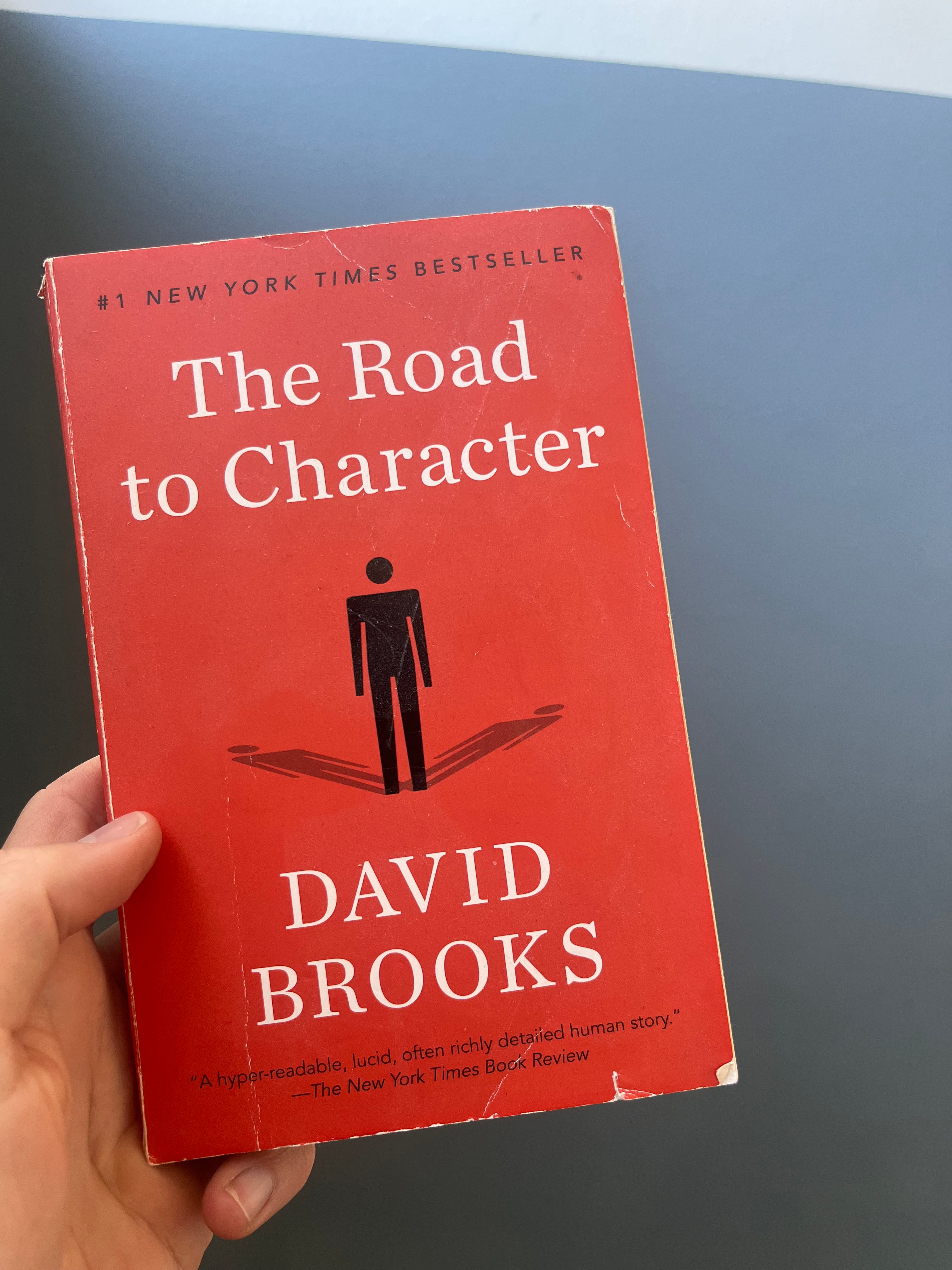
6. The Road to Character - David Brooks
I was late to the party on this one, but I am so glad to have finally read it. The book begins by contrasting ‘resumé virtues’ with ‘eulogy virtues.’ The former being those things which give you external success and job opportunities; the latter being those things which people will say about you when you are gone - whether you had kindness, bravery, honesty, or faithfulness for example. He argues that our world has become fixated on the resumé virtues rather than the deeper ones which build character. That’s a thesis I can get on board with.
The basic outline after that introduction is ten chapters each centred around a particular person. Frances Perkins, St Augustine, George Marshall, George Eliot, Samuel Johnson are amongst those chosen. Brooks gives a brief, selective biography of each, often focusing on the unique hardships they experienced, and then gleans particular lessons from their life pertaining to character. There is therefore a good mix of story and observation throughout. As an example, General George Marshall was raised to be highly disciplined, stoic, and willing to subjugate personal desires for the bigger picture. This made him an ideal military leader, although it took him a long time to ascend to the rank of general. He gained the trust of those on all sides of any given debate due to his reputation for immense integrity and ability to speak the truth without a political angle.
The structure of each chapter is somewhat formulaic, and by the end of the book I was a bit tired of this cyclical approach, but the quality of the stories remained high throughout - some of the people I’d now happily read a whole book about (like Dorothy Day!).
In brief: a book which anyone interested in character development and personal growth should read. I made extensive notes so probably won’t re-read the whole book again, but will consult my notes as needed!
Thanks for reading - if you have read any of these before, I’d love to know what you thought of them. Reading book reviews and getting recommendations from others is how I often choose what to add to my reading list - so do let me know if a periodical post like this is of interest to you. Until next time!
After decades confined within evangelical protestantism, itself born alongside rational enlightenment epistemology, it’s taken me years to get my head around the idea that alternative atonement theories may exist, let alone co-exist in a dialectical way.
Iain McGilchrist’s “Master & Emissary” suggested to me that the bicameral mind (ours) is even designed to assimilate attention into understanding through a dynamic interaction between two different ways of knowing.
Naturally I’m still likely to accidentally throw the infant baby Jesus out with the bath water by rejecting PSA (a suspicious latecomer IMHO!) in preference for Recapitulation and Christus Victor (CV). But before I accede to your multi-modal view, I’m still working through classification questions.
For example: I don’t see that Recapitulation is at all separate from, let alone exclusive of, CV and I question: shouldn’t we distinguish illustrative recapitulation from effective recapitulation to avoid misconstruing recapitulation as a partner of PSA?
My last essay at http://SteveWeeks.Blog on “Good Art by Bad People” argues with René Girard that the cross deliberately echoes (in recapitulation?) a sacrifice, but it is not another sacrifice; nor is it a final sacrifice to end sacrifice (PSA?); but is the unmasking of sacrifice for its true identity as pagan religion.
My next essay will argue this, not from the previous starting point , but from the new question of whether classification of atonement concepts might help by separating illustrations and metaphors from a recapitulation of The Core Story, if there is one!